
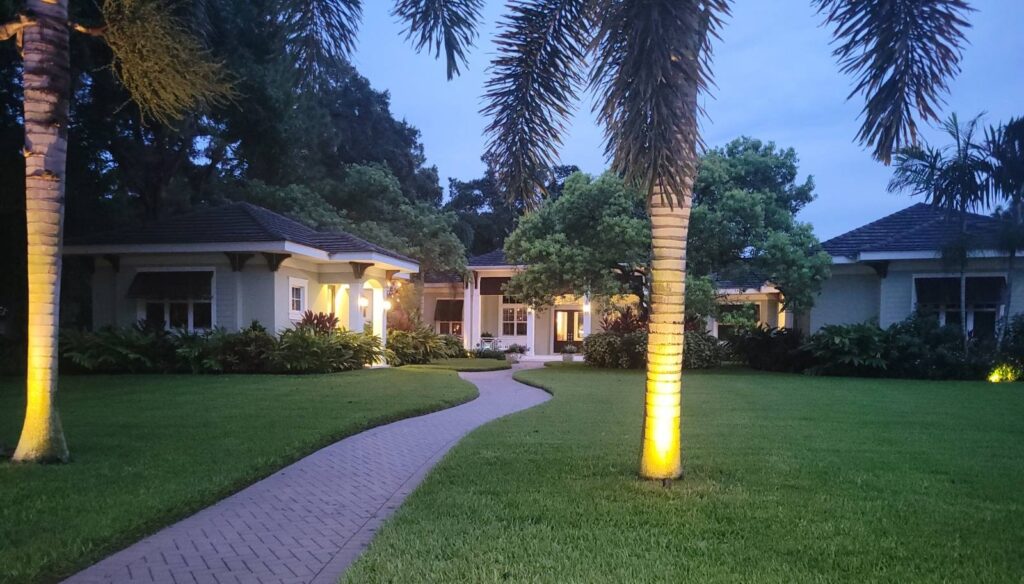
Florida’s landscapes are unique — from palm trees and tropical plants to waterfront views, stucco architecture, lanais, and expansive outdoor living areas. Because of this, outdoor lighting in Florida isn’t just practical… it’s an art form.
When lighting is designed specifically around Florida’s environment, it becomes a powerful tool that enhances beauty, increases safety, and elevates the entire outdoor experience.
Here’s how lighting interacts with Florida’s distinctive landscape and how thoughtful design brings the best out of your property.
1. Lighting Florida’s Palm Trees (A Signature Look)
Palm trees are one of Florida’s greatest lighting opportunities. Their height, texture, and movement create dynamic nighttime effects when illuminated properly.
Why palms look incredible with lighting:
- The fronds cast beautiful, natural shadows
- The trunks create vertical lines that draw the eye upward
- The height provides drama without overwhelming the landscape
Lighting techniques we use:
- Uplighting from multiple angles for a smooth, even glow
- Offset lighting to highlight trunk textures
- Selective lighting so only signature palms are illuminated
This creates a classic, resort-style look that feels warm, coastal, and high-end.
2. Highlighting Tropical Plants & Lush Landscaping
Florida landscapes tend to be full, layered, and colorful — think birds of paradise, hibiscus, crotons, and ferns. Lighting should enhance that richness without flattening it.
Key considerations:
- Tropical plants have large leaves that reflect light beautifully
- Dense clusters of greenery require layered, low-intensity lighting
- Plants grow quickly, so fixtures should allow for easy adjustments
Best lighting approaches:
- Soft accent lights for texture
- Ground-level fixtures angled upward to highlight leaf shapes
- Spacing that allows for growth to avoid blockage later
This creates depth, contrast, and a natural, inviting nighttime garden.
3. Designing Lighting for Stucco & Coastal Architecture
Florida homes frequently feature stucco exteriors, pavers, barrel tile, and coastal or Mediterranean-inspired architecture. These materials reflect and diffuse light differently than traditional siding or brick.
How lighting interacts with Florida architecture:
- Stucco surfaces glow softly when washed with light
- Light-colored exteriors require lower intensities to avoid glare
- Architectural details like columns and arches offer excellent focal points
What we highlight:
- Arches and entryways
- Textured walls
- Rooflines and architectural peaks
- Paver driveways and walkways
Proper placement emphasizes design angles and adds nighttime elegance without overpowering the home.
4. Lighting Waterfronts, Docks & Coastal Areas
Water dramatically changes how light behaves. It reflects, softens, and multiplies illumination in ways no other element does.
Lighting considerations near water:
- Light reflecting on water creates a peaceful shimmering effect
- Too much light can cause glare — softer lighting works best
- Fixtures must withstand salt, moisture, and corrosion
- Path and dock lighting should help with safe movement near water
When done right, waterfront lighting feels luxurious, calm, and naturally ambient.
5. Enhancing Florida’s Expansive Outdoor Living Spaces
Many Florida homes include:
- Lanais
- Pool decks
- Patios
- Outdoor kitchens
- Fire pits
These spaces become nighttime gathering zones with the right lighting plan.
What works best in these areas:
- Downlighting for natural, moonlit ambiance
- Step and riser lighting for safe transitions
- Soft accent lights around seating areas
- Subtle perimeter lighting to define space
The goal is to create an environment where light supports relaxation, conversation, and comfort.
6. Considering Florida’s Climate: Heat, Moisture & Storms
Lighting in Florida must be designed for conditions that aren’t found everywhere else.
Unique Florida challenges:
- High humidity
- Intense sun
- Tropical storms
- Salt exposure near the coast
- Fast-growing vegetation
What this means for your lighting system:
- Fixtures should be durable and corrosion-resistant
- Wiring and connections must be protected
- Installations should anticipate plant growth over time
- Systems must be accessible for seasonal adjustments
A Florida lighting design is only successful if it lasts — and adapts.
7. Natural Light Pollution Awareness
Because Florida neighborhoods are often close together, and wildlife is abundant, lighting must be intentionally placed.
Good Florida lighting design avoids:
- Shining light into neighbors’ windows
- Excessive upward light (skyglow)
- Harsh beams that disrupt nature
- Post lights that glare rather than guide
Soft, directional lighting not only feels elegant — it’s respectful to your environment.
8. Why Professional Placement Matters More in Florida
Florida landscapes are visually rich, architecturally varied, and heavily influenced by natural elements. Because of this, placement is everything.
Professionally designed lighting ensures:
- Balanced illumination
- No washed-out plants
- No harsh glare on water or windows
- A cohesive nighttime look
- Minimal future maintenance
- A design that complements the home’s style
In Florida, lighting isn’t just technical — it’s environmental.
Bring Your Florida Landscape to Life at Night
At Shaffer’s Irrigation & Outdoor Lighting, our designs are built for the Florida lifestyle. From palms and tropical plants to stucco architecture and coastal areas, we understand how light interacts with every part of your property.
Ready to enhance your home’s beauty after dark?
Contact us today to schedule your consultation and explore what’s possible for your Florida landscape.